
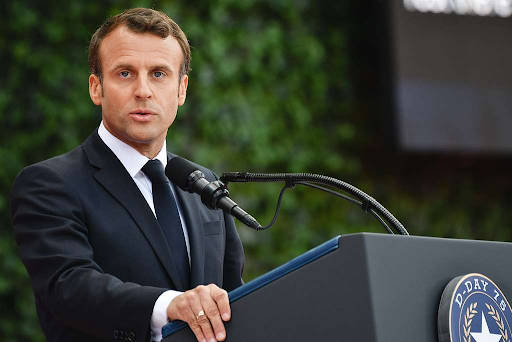
Turning points in international policy are rarely announced in advance. They are identified in retrospect, as the moment when political will aligned with evidence and institutional opportunity to produce real change. Emmanuel Macron’s interventions at the AI Impact Summit in Delhi have the potential to be identified, in retrospect, as exactly such a turning point — the moment when child safety in the AI era moved from acknowledged concern to genuine international priority.
The conditions for a turning point exist. The evidence is overwhelming: 1.2 million children victimised by AI deepfakes in a single year, according to Unicef and Interpol. The political will, at least in France and among several international partners, is real. The institutional opportunity is France’s G7 presidency — a platform that allows Macron to convene, coordinate and push for enforceable commitments from the world’s leading democracies. The question is whether these conditions are sufficient.
Macron’s strategy for making them sufficient is visible in his Delhi speech. He leads with evidence to establish moral authority. He defends European regulation to demonstrate that safety and innovation are compatible. He builds coalitions — with Guterres, with Modi, with parts of the tech industry itself — to show that his position is not a European eccentricity but a growing global consensus. He proposes specific policy mechanisms — legislation, international standards, platform accountability — rather than aspirational statements.
The obstacles are real but not insurmountable. American opposition to AI regulation is politically powerful but morally weak on child safety specifically. The tech industry’s resistance to enforceable accountability is diminishing as the evidence of harm mounts. The difficulty of international coordination is genuine but not unique to this issue — G7 agreements have been achieved on comparably complex subjects before.
For children worldwide, the potential turning point that Delhi represents is simple: a world in which the technology being developed and deployed around them is governed in their interest, not just in the interest of its commercial developers. That world does not yet exist. Whether it comes into being depends in significant part on what Macron’s G7 presidency produces. The turning point is possible. Making it real is the work that begins now.